Women's Self-Defense — Cedar Knolls, NJ (Morris County)
Women's Self-Defense Classes
in Morris County, NJ
Most women who train here didn't walk in scared — they walked in too polite: taught to be quiet, to not make a scene. We train the opposite — the voice, the boundary, and the body that backs them up. About 40% of our studio is women. No experience needed.
4.9★ · 49 Google reviews · a permanent women's track — not a one-off seminar
A drilled response takes about 3 months to build — it can't be summoned the moment you need it. Start before you need it.
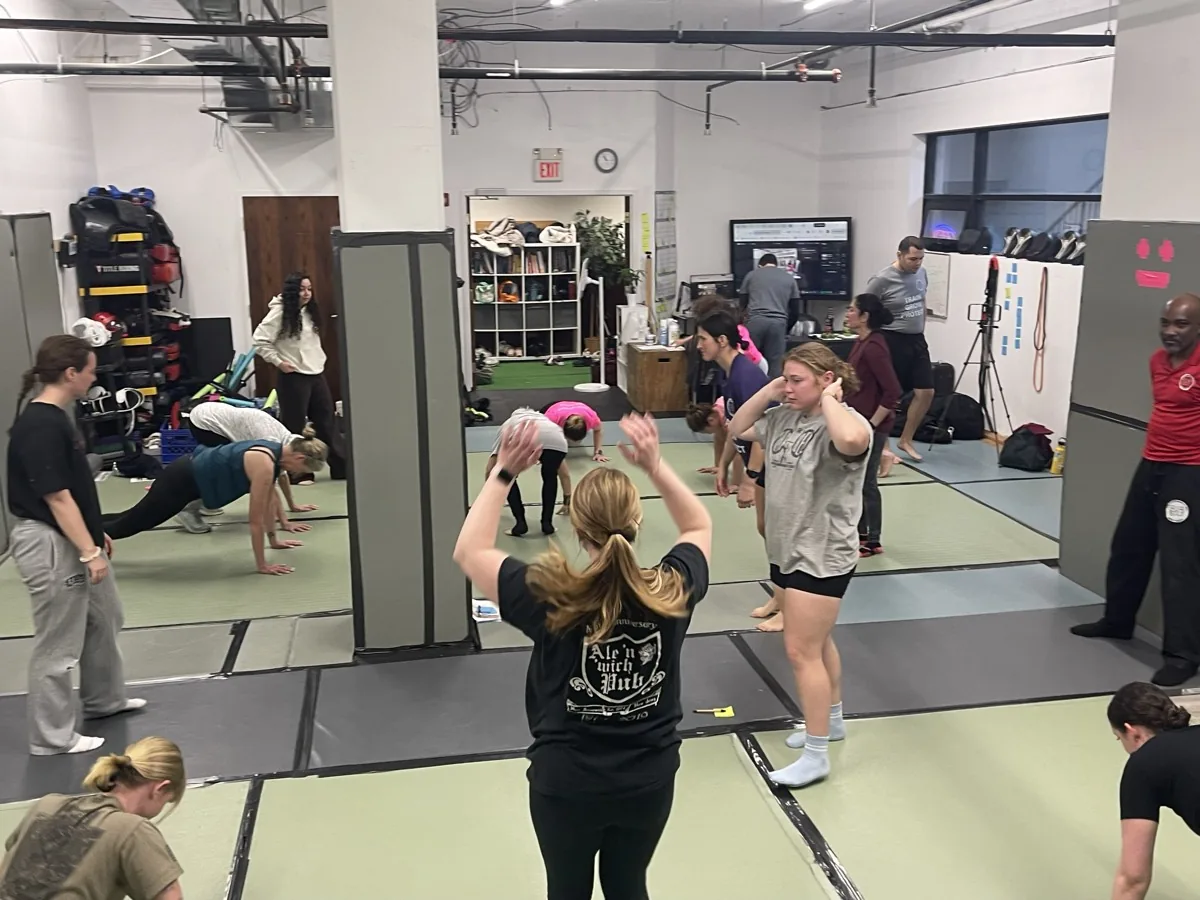
Most women who walk into SD4ALL say the same thing: "I've been meaning to do something like this for years." And most of them walk out after their first class and say: "I didn't expect it to be this real."
This isn't a fitness class with kicks. It's Krav Maga — built around what the data says actually happens. Strikes come first. Then pushes and grabs. Chokes are further down the list. Weapons are last. The curriculum follows that order because your training should match your actual risk.
What the Data Actually Shows
We lead with facts, not fear. Training for the wrong scenario is how people end up with false confidence. Here's what the national data actually says — and why we train the way we do.
women report being pushed, grabbed, or shoved — the most common physical assault. So that's what we drill first, until it's automatic.
the rate of choking or strangulation women face versus men — a short-window, high-stakes scenario. That's why choke defense is drilled, even though it isn't the most common.
violence against women involves someone she knows — not a stranger in a parking garage. So awareness, boundaries, and de-escalation come first.
weapons are the least common — so we don't build the whole program around movie-style disarms.
This isn't meant to scare you — it's to make sure what you train matches what actually happens. Source: NIJ/CDC Full Report on Violence Against Women (Exhibit 23, n=8,000) · CDC NISVS. See the full data + every source →
What You'll Learn — In Order of What Actually Happens
The order a real situation actually unfolds — prevention first, then the physical skills by how often they happen. Grounded in the NIJ/CDC data.
Awareness and de-escalation
Most situations have a warning stage — someone testing, getting closer, following. The first and most important layer is reading it early and keeping it from going physical. Knowing when not to engage is a skill too.
Parking lot and street safety
Where and how situations start — approach recognition, distance management, low-light awareness, getting to your car or your door. Prevention is the self-defense you hope you never have to escalate past.
Pushes, grabs, and shoves
The most common physical attack in the data — about 1 in 4 women. Someone grabs your arm, shoves you into a wall, restrains you. You learn the break, the position, the exit, practiced until automatic.
Strikes
The second most common — being slapped or hit. You learn to move under it, protect your head, and answer back, drilled with real partners under increasing pressure.
Choke defense
Less common, but trained because the window is short and the stakes are high — women face choking at over twice the rate of men. Front and rear, against larger attackers, drilled until it stops requiring thought.
Ground survival
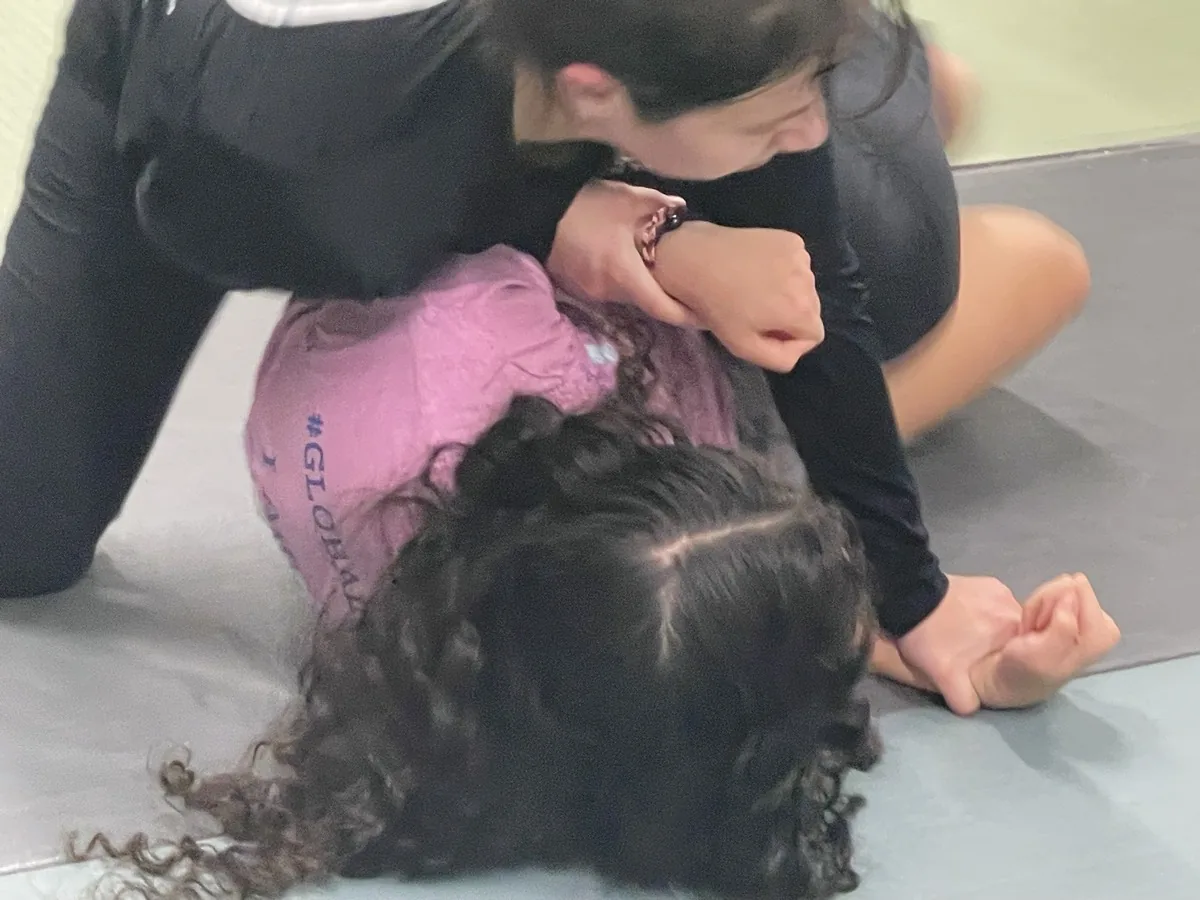
When a grab or shove escalates and you end up on the ground with someone bigger on top. Simple principles trained under pressure — protect yourself, create space, get back on your feet.
Your Instructor
Gonçalo Esteves — Founder & Chief Instructor
Teaching Krav Maga since 1997, across four countries — Portugal, Norway, UK, and the US. Sixteen years on the Portuguese National Team. Left competition to build a self-defense system that works for working adults, not athletes — especially people who never trained a day in their life. Over 600 students through the program at SD4ALL since 2012.
Classes are also led by our certified instructor team. About 40% of the regular studio is women — so on day one, or month six, you won't be the only woman in the room.
Who These Classes Are For
What the FBI Data Says About Real Assaults
Most self-defense training treats every situation as one-on-one. The data says otherwise.
According to the FBI's Uniform Crime Report for 2024:
- 49.2% of assault victims were attacked by multiple offenders, with at least one known to the victim.
- 21.9% were assaulted by a family member; 13.5% by strangers.
- 52.1% of sex offense victims reported "known to victim and other" as the relationship.
That's why our drills include second-attacker scenarios, controlled multi-person pressure, and reading angles you can't see in a ring. Sport timing and survival timing are built differently — and the FBI's own data says the survival side matters more than most schools admit.
Source: FBI Uniform Crime Report, Summary of Reported Crimes in the Nation, 2024 — page 10, Figure 4 (NIBRS data). Released August 2025 by the U.S. Department of Justice. National figures; a New Jersey-specific breakdown is in development (relevant given the studio's commute corridor to NYC and PA).
What Our Data Shows
We track student progress openly. 130 of our students' weekly check-ins over five months — that's our Warrior Code dataset. The biggest predictor of real results is not fitness or age or gender — it's commitment to the at-home practice plan. Students who follow the plan report "strong progress" at 36% vs. 14% for those who don't. That gap of 22 percentage points is wider than the difference between attending 2× and 3× per week.
We show you the system. You decide how far to take it.
Read the full data → Warrior CodeWomen's Self-Defense Workshop — Morris County
We run dedicated Women's Self-Defense Workshops 3–4 times per year — half-day intensives open to complete beginners. No regular commitment required. Come learn the fundamentals in one session. Bring a friend. Ask about the next upcoming date when you book your free class.
Ask About the Next WorkshopWhat Women Say After Their First Class
"I walked in thinking I'd feel awkward and out of place. I walked out feeling like I actually could do something if I had to."
"I expected to feel out of place as a beginner. The coaches know exactly where the nerves are and address them before you even have to ask."
"I've been in gyms my whole life. This is nothing like a gym class. They actually teach you to use your head, not just your body."
Our Studio & Who We Serve
Cedar Knolls — our studio
210 Malapardis Rd, Cedar Knolls, NJ 07927
5 min from Morristown · off Route 24
Free parking on site
Evening classes Monday–Friday + Sunday mornings
Beginner-friendly Friday session — many women attend
Serving Morris County
One studio in Cedar Knolls — women come to train from across Morris County:
Morristown · Madison · Chatham · Parsippany · Florham Park · Randolph · Whippany · Morris Plains
Women's Self-Defense Classes — Frequently Asked Questions
- Do I need any self-defense experience to join the women's class?
- No experience needed at all. Our women's classes are built for beginners. We start with the fundamentals — awareness, body positioning, how to break a wrist grab — and build from there at your pace. Most women walk in nervous and walk out feeling like they actually learned something real.
- What can I expect as a beginner woman training here?
- About 40% of our studio is women. Day one, or month six — you won't be the only woman in the room. Our Friday evening Krav Maga class in Cedar Knolls is a beginner-friendly session many women choose, taught with a consent-based approach. Gonçalo (founder, teaching Krav Maga since 1997, 16 years on the Portuguese National Team) and our certified instructors lead every session.
- What will I actually learn in these classes?
- The curriculum follows the NIJ/CDC data on what actually happens to women. Strikes are most common, so that's where you start. Then pushes and grabs. Then ground survival. Choke defense is covered once you have the basics. We also cover awareness and de-escalation — knowing when a situation is turning before it goes physical. You'll leave knowing what to do, not just having watched someone else do it.
- How long before I can actually defend myself?
- Most women notice a real confidence shift after 3–4 classes. That's because Krav Maga is built around repetition of the most statistically common attacks — strikes, pushes, grabs. By week 4 you've drilled the responses enough that they start to feel automatic. Full capability takes longer, but you won't leave your first class feeling like you learned nothing.
- I'm not fit. Can I still do this?
- Yes. This is not a fitness class that happens to involve some self-defense. It's a self-defense class with conditioning built in. Our youngest student is 22 and our oldest female student is 67. We adapt to your body, your fitness level, and any joint issues. Tell us what you're working around — we'll work with you.
- Where are the classes? Is there parking?
- Our studio is in Cedar Knolls, NJ (210 Malapardis Rd, 07927), about 5 minutes from Morristown. Easy off Route 24. Free parking lot on site. Classes run evenings Monday–Friday and Sunday mornings.
- Is there a women-only class, or a beginner-friendly class women tend to choose?
- We don't run a strictly women-only weekly class. Our Friday evening Krav Maga in Cedar Knolls is a beginner-friendly class where many women train — about 40% of the regular studio is women. For a women-focused intensive, we host Women's Self-Defense Workshops 3–4 times per year — half-day sessions designed for complete beginners. Ask about the next workshop date when you book your free class.
- What does it cost?
- Your first class is free. We'll talk pricing in person after class — different programs fit different goals (6-Week Challenge, 6-Month, year-long). The free class lets you see whether this is right for you before anyone discusses money.